Last updated 2026-08-20
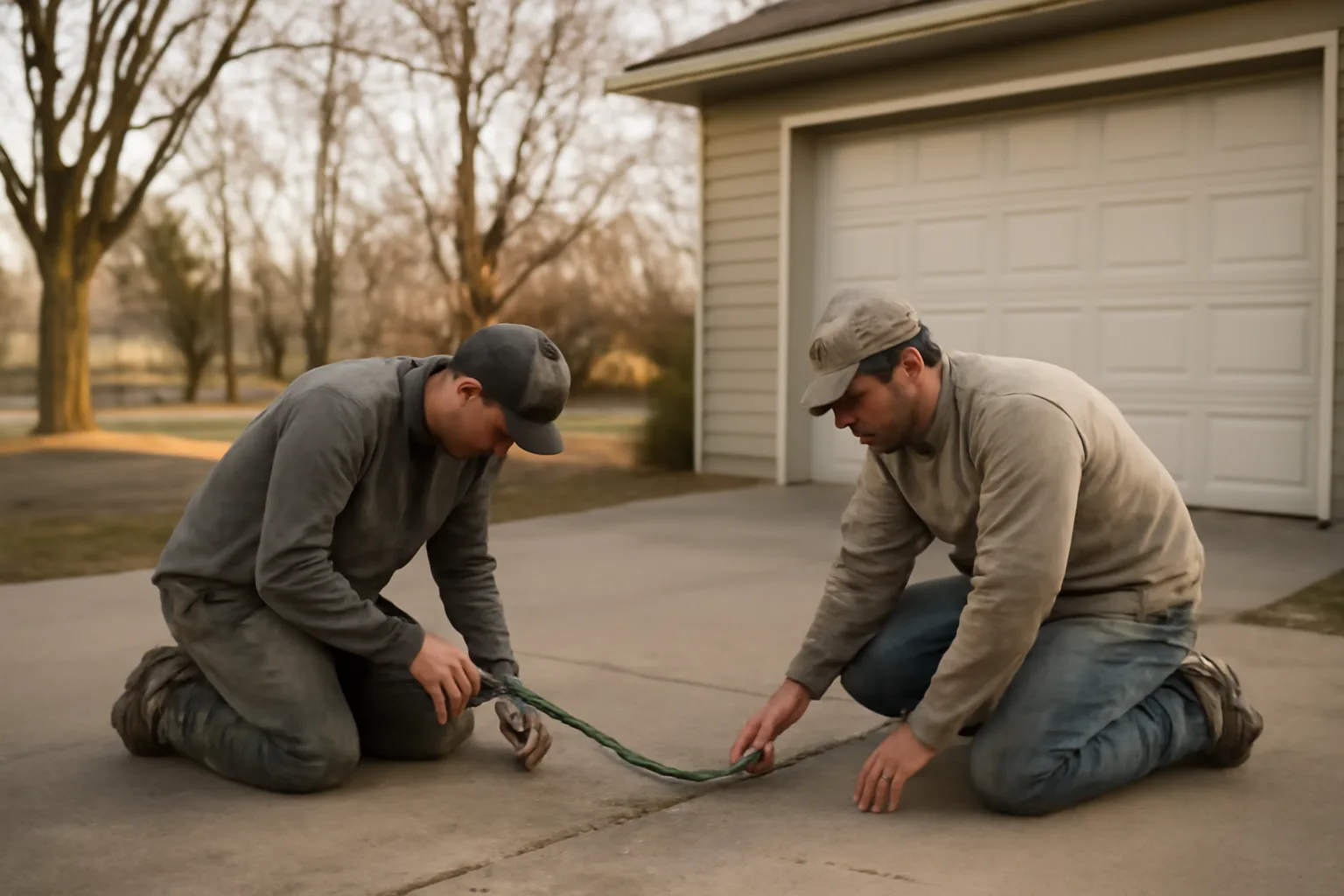
TL;DR
Slab lift means injecting grout or polyurethane foam under a sunken slab to raise it. Year one is a contractor license where your state requires one, local permits, OSHA silica and isocyanate controls, insurance, and a job file you can defend. Confirm every fee and classification with the board that issues the card. Nobody can promise an approval date.
What is slab lift?
Slab lift raises a sunken slab by pumping cement grout or expanding polyurethane foam through small drilled holes until the panel moves back toward grade. It repairs existing concrete. It is not a new pour and not a deep foundation. Most residential calls are driveways, sidewalks, garage slabs, and pool decks.
Highway crews run the same physics under the names slabjacking or slab stabilization. The Federal Highway Administration Concrete Pavement Preservation Guide treats restoring support under concrete panels as a preservation treatment, not a reconstruction.[11] Your driveway job is a smaller, dirtier version of that, with a homeowner watching from the kitchen window.
Two material families show up. Mudjacking uses a cementitious slurry. Foam lifting uses a two-part polyurethane that expands under the slab. Foam weighs less. Grout is heavier and usually cheaper per pound. Do not marry one system in month one. Run the jobs you can photograph, measure, and warrant.
Here is what slab lift will not do. It will not knit a slab that has broken into separate pieces on a rotten base. It will not fix an active plumbing leak. It will not replace a city permit when the sidewalk sits in the right of way. If the panel is structurally done, say so and walk.
Put this sentence on your estimate: slab lift fills voids and raises the panel. That wording keeps you out of we-rebuilt-your-foundation trouble.
How do you start slab lift?
You start slab lift by proving you can legally contract in your city and state, then building the safety and job paper that matches the chemical you inject. The field work is drill, inject, patch, clean the joint. The business is a contractor file. Skip the file and the first complaint can end the year.
Here is the order I would run.
Read the contractor statute and call the local permit desk with one scope sentence: you drill and inject grout or foam under residential slabs for hire. California Business and Professions Code 7026 defines a contractor as a person who undertakes or bids to construct, alter, repair, or improve a structure or project.[4] That is the box most driveway lifts fall into. Arizona makes it unlawful to act as a contractor without a license.[13] Florida sorts contractor categories in section 489.105 of the 2023 Florida Statutes.[7] Colorado does not issue one statewide general contractor card the way California does, so you confirm city by city. Use how to start slab lift in Colorado if that is home.
Form the entity. Get an EIN when the IRS says you need one. The Service publishes an online EIN application path and the cases that require a number.[9] Do this before you buy chemical or print door hangers.
Stand up insurance and a one-page exposure list: silica, isocyanates, vehicles, completed operations. Pick one material system. File the current SDS. Train to that SDS, not to a sales deck. Then do a handful of paid jobs for people who let you shoot before and after photos, with a written scope that states what you will not fix.
Do not buy a new truck wrap in month one. That money is gone for nothing. A clean pickup, a proportioner or grout pump you can service, and an injection log will make more. State walkthroughs live here: how to start slab lift in California and how to start slab lift in Alabama. Those pages track board paper.
What licenses do you need in the first year?
You need the contractor or specialty license your state and city require for concrete repair for hire, plus the local business tax certificate. There is no federal slab lift license. A weekend class is not a license.
California is the clearest public example. Contracting without the required license is a misdemeanor under Business and Professions Code 7028.[5] Most driveway and sidewalk lifts sit inside the C-8 Concrete classification. CSLB describes that class as the contractor who forms, pours, places, finishes, and installs specified concrete work, including pavement and flatwork.[6] Confirm the class on the live CSLB page before you sit anything. Fees move. Confirm the current fee with the board. Nobody here can promise you a processing date.
California Business and Professions Code 7071.6 requires a $25,000 contractor's bond for the licensees covered by that section.[3]
Florida work sorts under chapter 489. Read 489.105, then call DBPR and the city for the same address.[7] A public sidewalk can need a right-of-way permit even when the driveway was a cash job.
Arizona Revised Statutes 32-1151 makes unlicensed contracting unlawful.[13] Connecticut often starts residential operators at a home improvement registration. Confirm the current form on the Department of Consumer Protection site. For those paths see slab lift license in Arizona, slab lift license in Alabama, and slab lift license in California.
A dollar threshold is a trap, not a loophole. A $900 patio plus a change order can put you over. Get the card if you advertise. Do not collect out-of-state reciprocal licenses in year one. Get one home-state license right.
What paper belongs in the truck before job one?
You need the entity record, an EIN if you need one, the license or registration the board requires, a certificate of insurance, the SDS for every chemical on the truck, a written hazard communication program, and a job ticket with scope, exclusions, and permit responsibility. That stack is the first-year business.
OSHA's hazard communication standard, 29 CFR 1910.1200, requires that employees get hazard information through labels, safety data sheets, and training.[12] Foam A-side and B-side are more than resin. If you cannot put your hands on the current SDS in the cab, you are not ready.
Keep a folder per job. Signed estimate with a lift target in inches. Photos before you drill. A utility locate if you are near known lines. An injection log with hole count, shot sizes, and final elevation. A note on leftover chemical. Final photos. A workmanship note that matches what you can stand behind.
City walks and HOA common areas need written permission. First-year operators who fix the city sidewalk as a favor often eat a restoration spec they never read.
IRS Publication 535 lets a new business deduct up to $5,000 of start-up costs if total start-up costs do not exceed $50,000.[8] Amounts you cannot deduct up front are amortized over 180 months. That is tax paper. It is not a reason to buy a second machine you will not use.
What OSHA rules actually hit a slab lift crew?
OSHA expects you to control silica from drilling concrete, follow the SDS for isocyanate foam, train the crew, and issue PPE that fits. There is no separate slab lift standard. The construction and health rules attach to the tasks.
Drilling cured concrete makes respirable crystalline silica. OSHA 1926.1153 sets the respirable crystalline silica PEL at 50 μg/m3 as an 8-hour TWA.[1] The same rule sets a 25 μg/m3 action level. If you hit that action level 30 or more days a year, the medical surveillance piece of 1926.1153 applies. Read Table 1 before you invent a drill protocol. A shrouded bit and a HEPA vac cost less than a fight after a complaint.
OSHA publication 3142, Concrete and Masonry Construction, is the federal booklet I would put in a new lead's truck. It walks 29 CFR 1926 Subpart Q hazards. It is not foam-specific. Still useful.[2]
Foam is the other exposure. NIOSH Publication 2006-149 states, "Workers exposed to isocyanates may develop serious or fatal respiratory disease."[10] Sensitization is not a contest. Once it happens, that worker may be done with the trade.
Run a short SOP. Wind check. Neighbor cars. Gloves and eyewear. Cartridge change dates. No lunch on the gun. Enforce it.
OSHA 1926.21 also requires the employer to instruct each employee in the recognition and avoidance of unsafe conditions.[15] A one-line toolbox note is enough if the talk actually happened.
How much does a slab lift first year cost?
There is no honest national average for first-year slab lift spend, and I will not invent one. Your number is license and bond (state-specific), insurance (market-specific), an injection system you can get parts for, a drill kit with dust control, starter chemical, a truck that already runs, and several months of living money. Confirm every government fee with the board that cashes the check.
Spend first on the license, the insurance, dust control that can meet 1926.1153 Table 1, and a used system with a local tech. Do not spend first on a franchise territory, a new wrap, or a three-day certificate that pretends to replace a contractor license.
The IRS $5,000 start-up deduction in Publication 535 is a tax rule, not a purchasing plan.[8] If the start-up pile is bigger than the cap, you amortize. Ask a CPA who files trades returns.
Labor has gravity. The Bureau of Labor Statistics reported a median annual wage of $45,300 for construction laborers in May 2023.[14] That is not a foam technician rate. It is the wage floor many first-year shops bump into. Pay people who will log shots and wear the respirator.
If you want mix math and a bid-per-square-foot worksheet so patio prices stop living on a napkin, SlabLiftPath sells a $149 one-time Mix + Bid-per-Sqft Kit at /start. A plain spreadsheet works too.
What insurance do first-year slab lift operators carry?
They carry general liability with completed operations, auto coverage that matches the truck, and workers compensation when the state or the payroll requires it. Many cities will not issue a permit without a certificate that names them. Ask the desk for the wording. Do not guess limits from a forum.
I cannot publish a real premium. The number moves with claims, county, and whether you inject foam or grout. Call two agents who already write concrete repair. Tell them you drill and inject. If they never ask about isocyanates or silica, call a third.
Completed operations is the part people skip. The claim arrives months later when a slab moves and someone rereads your ad. Keep the policy and the job photos in the same folder.
If a helper drills for you, get a certificate or put them on the policy. A handshake is not a risk transfer. An umbrella can wait until you have revenue. Tools coverage is optional. The certificate that names the city is not optional if you want the permit. Confirm minimums with the permit office, not with a national template.
What equipment should you buy first?
Buy dust-controlled drilling, a level you use the same way every time, the PPE named on the SDS, and one injection system you can get hoses for next Tuesday. That is the year-one kit.
Here is the money you should not spend yet. A brand-new dually before you have a route. Two foam machines. GPR you cannot read. Conference gadgets. A cheap digital level used consistently will save more slabs than a pile of unused sensors.
Foam wants temperature control and clean ratios. Grout wants mixing discipline and a pump that can push slurry. Rent first if a shop in your region actually stocks the unit. If they do not, parts will be slow too. That is useful data.
Do not skip the HEPA vac to save for the gun. The silica rule does not pause because your website says foam is clean.[1]
Buy used steel and new hoses, not the reverse. Hoses fail on Saturday. Custom trailer cabinets mostly sit. A generator that starts and a water plan matter more than a painted interior.
How should you bid and file the first jobs?
Bid by measuring the panel, admitting you cannot see void depth, naming a lift target in inches, and writing exclusions for plumbing, soils, and cracked sections that will hinge. Charge for access and for return visits. A square-foot price with no void story is how shops lose money on hole three.
Write the file so a stranger could rebuild the job. Hole map. Shot log. Final elevations. Patched-hole photos. That file wins the month-eleven argument when the clay moves.
Price the return visit on page one. Soils are not a warranty. Your workmanship is.
| Line on the estimate | What you write | Why it is there |
|---|---|---|
| Lift target | 0.5 in at the garage joint | Stops make-it-perfect fights |
| Material | named foam or grout, SDS date | Matches the training file |
| Exclusions | plumbing, soils, other panels | Keeps foundation claims out |
| Permit | owner or contractor, named | Stops the city tag |
If the slab is in pieces, do not bid a lift. Bid a replace, or walk.
What goes wrong in the first twelve months?
Unlicensed ads, silica shortcuts, overselling a broken slab, and no cash after the first equipment failure. Leftover chemical disposal is the quiet version. You cannot dump A-side in the alley.
Complaints cluster on two words: forever, and perfectly level. Concrete was not perfect when it was poured. Promise a better trip edge and better drainage. Then deliver that.
Name and address changes need board filings. Put the expiration on a calendar the day the card arrives. California holders should keep slab lift license in California bookmarked. Colorado's structure is different. Use slab lift license in Colorado.
Hold a parts reserve. If the company dies when one hose fails, you built a hobby.
The other mess is hiring a helper as a 1099 because a video said so. Classification is a state and IRS fact pattern, not a vibe. If you set the hours, own the gun, and send them to your customers, budget for payroll tax and workers compensation. Confirm with your CPA and the state labor agency.
How do you confirm a rule with the licensing board?
Read the statute, then call or write the board with a plain scope: I drill and inject grout or polyurethane under residential concrete slabs for hire. Ask which classification, which application, and which fee is current. Write the person's name and the date. That note beats any national blog.
SlabLiftPath is an independent publisher, not a law firm and not a service company. We do not issue licenses and we do not know your city's sidewalk bond this week.
Take the same scope sentence to the building department and the insurance agent. If the three answers conflict, stop and get writing. Do not drill in the right of way on a verbal you are fine.
Connecticut residential work often starts at the Department of Consumer Protection home improvement registration. The walkthrough is here: how to start a slab lift business in Connecticut.
What does a solid first-year weekly protocol look like?
It looks boring. Monday you confirm locates, permits, and SDS on the truck. Midweek you run two or three jobs with the same shot log. Friday you wash equipment, check cartridges, send invoices, and back up photos. Saturday only if you enjoy being tired.
Daily closeout is four photos and three numbers. Before, during, patched holes, final elevation. Hole count, material used, inches gained. That is the quality system. You do not need software in month two.
Toolbox talks rotate. Silica one week. Isocyanates the next. Backing the truck the next. Keep a one-line attendance note so 1926.21 is not a fiction.[15]
One sales rule. No same-day bid on a slab you have not measured with your own level. Year one rewards people who decline bad panels. It punishes people who say yes to every sunken patio in the county.
Frequently asked questions
What is slab lift?
Slab lift raises a sunken concrete panel by injecting cement grout or expanding polyurethane foam through drilled holes until the slab moves back toward grade. It repairs existing concrete. It is not a new foundation and not a full replacement. Highway shops call the same idea slabjacking or slab stabilization. Walk away if the slab is already in independent broken pieces.
How do you start slab lift?
Start with the contractor license or registration your state and city actually require, then an EIN if you need one, insurance, the current SDS, and a written job ticket. Confirm the class and fee with the board that issues the card. Do a few photographed paid jobs before you buy wraps or a second machine. There is no federal slab lift license.
Do I need a contractor license to lift a driveway?
In license states such as California and Arizona, driveway lift for hire is contracting, not a favor with a foam gun. California BPC 7028 makes unlicensed contracting a misdemeanor. Arizona ARS 32-1151 makes acting as a contractor without a license unlawful. Some states use dollar thresholds or city cards instead. Confirm your scope with the board before you advertise.
Is mudjacking the same as foam slab lift?
Both are slab lift. Mudjacking pumps a cementitious slurry. Foam lift pumps a two-part polyurethane that expands under the panel. Foam is lighter. Grout is heavier and often cheaper per pound. License home is usually the same concrete or contractor class. The SDS, PPE, and leftover-chemical rules are not the same. Train to the system you will actually inject.
What OSHA rule covers drilling holes in concrete?
29 CFR 1926.1153 covers respirable crystalline silica from drilling cured concrete. The PEL is 50 μg/m3 as an 8-hour TWA and the action level is 25 μg/m3. Read Table 1 before you invent a protocol. Foam work also pulls in the SDS and 1910.1200 hazard communication. NIOSH has warned that isocyanate exposure can cause serious or fatal respiratory disease.
How much should I budget for year-one insurance?
Nobody has a clean published national premium for slab lift, and a blog number would be a guess. Budget for general liability with completed operations, auto that matches the truck, and workers compensation if you have payroll or your state requires it. Call two agents who already write concrete repair. If they never ask about silica or isocyanates, call a third.
Is an LLC enough to start taking jobs?
No. An LLC is an entity form. It does not replace a contractor license, a city business tax certificate, a permit, or a certificate of insurance. Get the EIN when the IRS says you need one, then ask the licensing board which card matches driveway and sidewalk injection. Taking jobs on an LLC alone is how first-year ads become complaints.
What belongs in a first-year job file?
A signed estimate with a lift target in inches, exclusions for plumbing and soils, before photos, a locate ticket if you are near known lines, an injection log, leftover-chemical notes, patched-hole photos, and final elevations. Keep the SDS date and the insurance certificate with that file. If a stranger cannot rebuild the job from the folder, the folder is not done.
Do I need a CDL for a slab lift truck?
Most first-year operators run a pickup or a light truck under CDL weight and do not need a commercial driver license. That changes if the combined weight, air brakes, or placarded chemical load crosses your state's CDL trigger. Confirm the actual GVWR and any hazmat rules with your DMV and the SDS shipper information before you buy a heavier rig.
How long does a slab lift license take?
There is no honest national timeline, and anyone promising a date is guessing. California, Florida, Arizona, and city desks all move on their own calendars. Exams, bonds, fingerprints, and incomplete applications add time. Confirm the current sequence and fee with the board that issues the card. Do not schedule paying jobs against a blog estimate.
Are foam manufacturer certificates a substitute for a license?
No. A manufacturer class can teach ratio, temperature, and warranty language. It is not a contractor license, a city card, or an OSHA program. Boards issue licenses. Cities issue permits. Keep the certificate in the training file if it is real, and still call the board with your scope sentence before you bid work.
Can I lift a slab that is already cracked through?
Sometimes you can improve a trip edge on a panel that still acts as one piece. If the slab has broken into independent pieces on a failed base, injection will not knit it back into a structural unit. Say that out loud. Bid a replace or walk. Overselling a broken slab is one of the reliable first-year complaint machines.
Who confirms my classification?
The licensing board that cashes the application, plus the city building or right-of-way desk for that address. Call with one sentence: you drill and inject grout or polyurethane under residential slabs for hire. Write the person's name and the date. Use that note when an insurer or a competitor tells you a different story.
What is a waste of money in year one?
A new truck wrap, a franchise territory, a second foam machine, GPR you cannot interpret, and any certificate sold as a national license. Spend first on the real card, insurance, silica controls, one serviceable injection system, and a parts reserve. A spreadsheet bids as well as a branded kit if you actually measure the panel.
Sources
- OSHA 29 CFR 1926.1153 Respirable crystalline silica: Construction silica PEL is 50 μg/m3 as an 8-hour TWA, with a 25 μg/m3 action level and medical surveillance after 30 or more days at or above the action level.
- OSHA Publication 3142 Concrete and Masonry Construction: OSHA Publication 3142 walks 29 CFR 1926 Subpart Q concrete and masonry construction hazards.
- California Business and Professions Code 7071.6: California BPC 7071.6 requires a $25,000 contractor's bond for covered licensees.
- California Business and Professions Code 7026: BPC 7026 defines a contractor as a person who undertakes or bids to construct, alter, repair, or improve a structure or project.
- California Business and Professions Code 7028: Contracting without the required California license is a misdemeanor under BPC 7028.
- CSLB C-8 Concrete contractor classification: CSLB's C-8 Concrete classification covers forming, pouring, placing, finishing, and installing specified concrete work including pavement and flatwork.
- Florida Statutes 2023 section 489.105: Florida Statute 489.105 defines contractor categories used to sort construction work under chapter 489.
- IRS Publication 535 Business Expenses: IRS Publication 535 allows a deduction of up to $5,000 of start-up costs if total start-up costs do not exceed $50,000, with remaining costs amortized over 180 months.
- IRS Apply for an Employer Identification Number (EIN) Online: The IRS publishes an online EIN application path and the cases that require a number.
- NIOSH Publication 2006-149 Preventing Asthma and Death from MDI Exposure: NIOSH states that workers exposed to isocyanates may develop serious or fatal respiratory disease.
- FHWA Concrete Pavement Preservation Guide: The FHWA Concrete Pavement Preservation Guide treats restoring support under concrete panels as a preservation treatment, not a reconstruction.
- OSHA 29 CFR 1910.1200 Hazard communication: 29 CFR 1910.1200 requires employers to provide hazard information through labels, safety data sheets, and employee training.
- Arizona Revised Statutes 32-1151: ARS 32-1151 makes it unlawful to act in the capacity of a contractor without the required license.
- BLS Occupational Outlook Handbook, Construction Laborers and Helpers: BLS reported a median annual wage of $45,300 for construction laborers in May 2023.
- OSHA 29 CFR 1926.21 Safety training and education: 29 CFR 1926.21 requires the employer to instruct each employee in the recognition and avoidance of unsafe conditions.