Last updated 2026-08-18
TL;DR
To start a slab lift business in Colorado, you need a registered business entity with the Secretary of State, general liability insurance, and local contractor registration in each city where you work. Colorado has no single statewide license for concrete repair. Expect startup equipment costs of $50,000 to $120,000 and residential job pricing from $150 to $2,500 depending on slab area.
What is slab lift and why is Colorado a real market for it?
Slab lift (also called mudjacking or polyurethane foam lifting) is the process of injecting material under a settled concrete slab to raise it back to grade. Two methods dominate. Traditional mudjacking pumps a cement-soil slurry. Polyurethane foam injection uses a two-part expanding foam. Both fix driveways, sidewalks, pool decks, garage floors, and commercial slabs without full replacement.
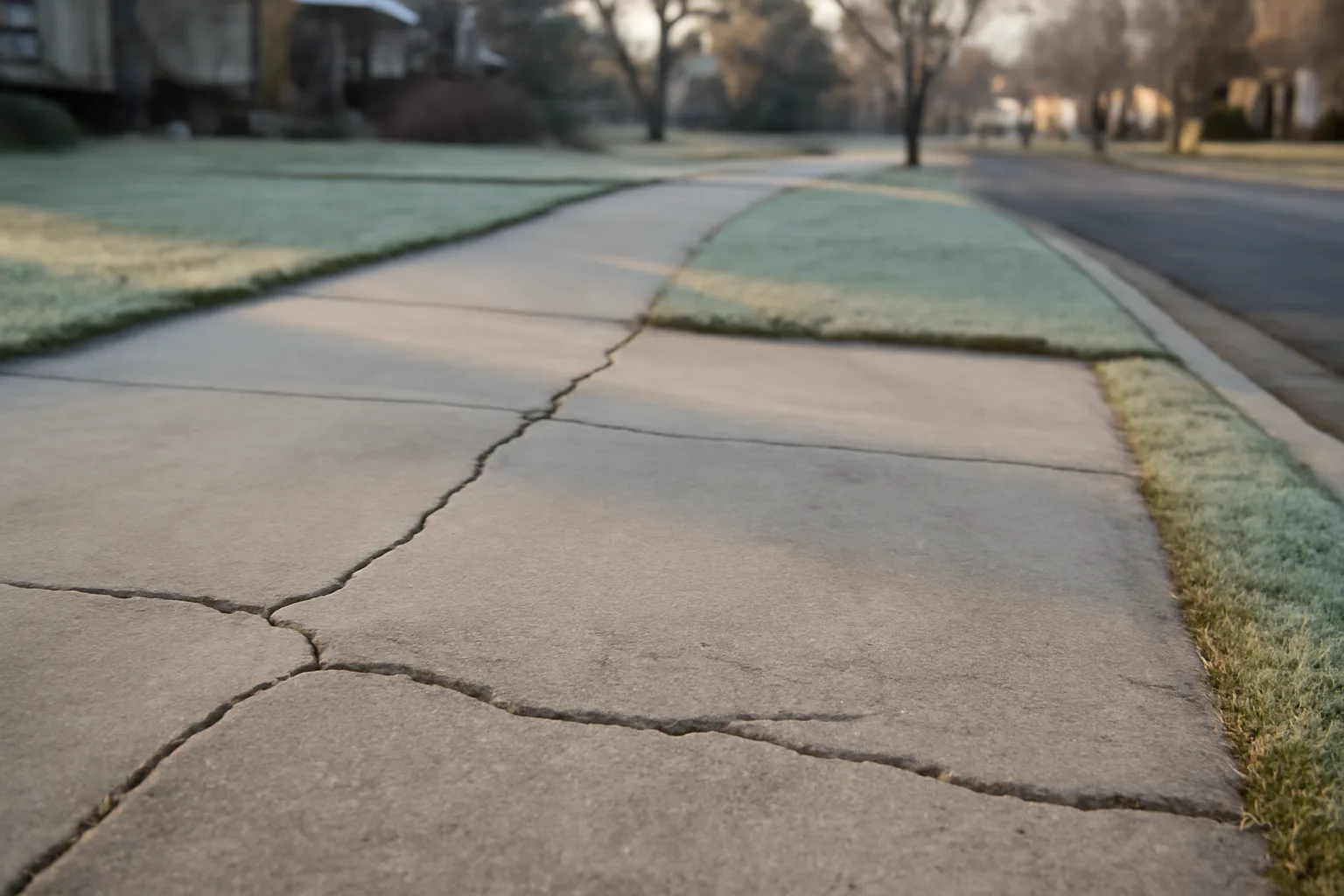
Colorado is a genuinely good market for this. Freeze-thaw cycling is aggressive at elevation, and Front Range soils include expansive clays and sandy fill that shift with the seasons. Denver, Colorado Springs, Fort Collins, and Pueblo all sit on aging residential concrete that settles, and homeowners there increasingly pick repair over replacement to save money. The U.S. Census Bureau counted roughly 2.5 million housing units in Colorado in its 2020 count, most of it packed along the Front Range where soil conditions are worst [1]. That's a deep pool of driveways and garage approaches waiting to settle.
Foam lifting has been taking share from mudjacking for a simple reason: cure time runs in minutes instead of hours, and the material is lighter, which matters on unstable subgrades. If you're deciding which method to lead with, foam justifies a higher price and sells easier in the Denver metro, where homeowners research options before they call.
Do you need a license for slab lift in Colorado?
Yes, but not the kind you're probably picturing. Colorado has no single statewide contractor license for concrete repair, and that trips people up.
The state licenses specific trades (electrical, plumbing, HVAC, a few others) through the Department of Regulatory Agencies, and construction work that doesn't fall into those named trades gets regulated locally. Slab lifting is a specialty concrete repair trade. It doesn't touch electrical or plumbing, so there's no state-issued specialty license for the act of pumping foam or slurry under concrete.
Here's what that means in practice. You register your business at the state level (more on that below), then you pull permits and meet local contractor registration rules in each jurisdiction where you work. Denver requires contractors to register with the City and County of Denver's Community Planning and Development department before pulling permits [2]. Colorado Springs runs its own registration through the Pikes Peak Regional Building Department [3]. Fort Collins works through Larimer County. Every Front Range municipality has some version of this.
The Colorado Revised Statutes require anyone with employees to carry workers' compensation insurance and to keep a registered business in good standing with the Secretary of State [4]. Those two things are the closest Colorado comes to a statewide requirement for a trade like slab lift.
So the honest answer: no single state slab lift license, but yes to local contractor registration in each city you work, yes to a registered business entity, and yes to mandatory insurance. Confirm current registration fees and rules with each municipality's building department before you bid your first job. The gap between what a city posts online and what it enforces at the permit counter is sometimes wide.
If you're also eyeing neighboring states, slab lift license in Arizona follows a different model, where the ROC issues a statewide license.
How do you register your business in Colorado for slab lift work?
Start with the Colorado Secretary of State's business center. You'll file an LLC (most common for owner-operators), a corporation, or a sole proprietorship. An LLC costs $50 to file online, plus a $10 periodic report fee each year [5]. Online filings usually process same-day, though confirm current times with the office because they shift.
Pick an LLC over a sole proprietorship. The liability exposure in concrete work is real. A slab that re-settles or a foam injection that damages a nearby utility line can generate claims bigger than a year's revenue. Separating your personal assets from the business is basic risk management, not a luxury.
After you have your entity, get a federal Employer Identification Number from the IRS. It's free and takes about five minutes online [6]. You need it to open a business bank account, hire employees, and handle payroll taxes.
Register with the Colorado Department of Revenue if you're collecting sales tax on materials or taxable services. Whether slab lift work is taxable in Colorado depends on how you write your contracts (time-and-materials versus lump sum) and the split between labor and materials. Colorado's sales tax rules for construction contractors are genuinely confusing. The Department of Revenue's contractor guidance publication is the right starting document [7]. Talk to a Colorado CPA before you price your first job.
Then register locally. Pull the contractor registration packet from each city or county where you plan to work. Budget $50 to $200 per jurisdiction, though these vary.
What insurance does a Colorado slab lift contractor need?
Colorado requires workers' compensation coverage for any contractor with employees. The Division of Workers' Compensation administers it [8]. A sole owner-operator with no employees can elect to exclude themselves, but that's a personal risk decision, not a blanket exemption.
General liability insurance isn't mandated by state statute for slab lift specifically, but every municipality that requires contractor registration will ask for a certificate showing GL coverage. A $1 million per occurrence and $2 million aggregate policy is the floor most cities accept. Concrete repair premiums run slightly higher than landscaping or painting because the work involves drilling into existing slabs and injecting pressurized material near foundations and utilities. Expect annual GL premiums in the $2,000 to $5,000 range for a startup, though your actual quote depends on payroll, revenue projections, and claims history.
Commercial auto coverage on any truck or trailer you use for work is separate, and Colorado law requires it. A standard personal auto policy excludes commercial use.
Work for commercial property owners or general contractors and they'll often require you to add them as an additional insured on your GL policy. That's standard. Your insurer handles it with a form endorsement at little or no cost.
How much does slab lift cost in Colorado (for the contractor starting out)?
There are two cost questions here: what it costs you to get into business, and what you charge customers.
Equipment is the big startup number. A basic polyurethane foam rig for residential work includes a proportioner (the mixing and pumping machine), hoses, guns, and a trailer or truck. New two-component proportioners from established manufacturers run $30,000 to $80,000. A used rig in good shape from a retiring operator can come in at $15,000 to $35,000, but it carries more maintenance risk. Add a trailer or truck, injection ports, drill gear, and foam for your first jobs, and a realistic startup equipment budget is $50,000 to $120,000 on the low end. Operators launching with a full-size commercial rig and a new truck spend $180,000 to $250,000 before their first invoice.
Mudjacking gear is cheaper. A pump, hoses, and mixing setup can be assembled for $10,000 to $30,000. The tradeoff is heavier material (which means a bigger truck), longer cure times, and a harder sell against foam-lift competitors in an educated market like Denver.
On the customer-facing side, Colorado residential slab lift typically runs:
| Job type | Typical price range (Colorado) |
|---|---|
| Single driveway panel (2 lift holes) | $150 to $350 |
| Full driveway (6-12 panels) | $600 to $2,200 |
| Garage floor (average 400 sq ft) | $800 to $2,500 |
| Sidewalk sections (4 panels) | $300 to $700 |
| Pool deck (per section) | $200 to $500 |
These ranges come from published contractor price sheets and regional estimates, not controlled survey data. Nobody has clean survey data on Colorado slab lift pricing specifically. The closest published benchmarks come from national cost databases like HomeAdvisor, which shows national concrete leveling ranges of roughly $3 to $25 per square foot depending on method [9]. Front Range pricing tends to track the upper third of national ranges because Denver labor costs and cost of living sit above the national median.
To estimate your own jobs, start with your material cost per board-foot of foam and your labor time per hole. The SlabLiftPath Mix + Bid-per-Sqft Kit at $149 gives you a spreadsheet framework for building those numbers into a real bid without guessing at margins.
Confirm all material costs with your supplier before pricing a job. Foam resin prices swing with petrochemical feedstock costs and aren't stable year over year.
How long does slab lift take in Colorado?
Two timelines matter: how long a job takes on-site, and how long it takes to get your business running.
On-site, a typical residential driveway lift with polyurethane foam takes one to three hours for a crew of two. That covers drilling the injection ports, pumping foam, watching the lift, patching ports, and cleanup. A full garage floor might take three to five hours. Commercial jobs with dozens of panels can stretch to a full day or more. Mudjacking takes longer per hole and needs a longer cure wait (often 24 hours before traffic), while foam can take foot traffic in as little as 15 minutes.
On the business formation side:
- Colorado LLC filing: typically same-day online [5]
- EIN from IRS: 5 to 15 minutes online [6]
- Local contractor registration: varies by municipality, from same-day to 4 to 6 weeks in busy building departments
- Insurance policy binding: 2 to 5 business days after quotes
- Equipment sourcing: 2 to 12 weeks depending on new, used, or custom rig
With capital in hand and no complications, you can be registered, insured, and operational in four to eight weeks. Local contractor registration is the least predictable step. Denver's Community Planning and Development office processes volume tied to the overall construction market, and permit counter waits stretch in spring. Call the building department directly for current processing times before you set a launch date.
What equipment do you actually need to start slab lift in Colorado?
The minimum viable rig for polyurethane foam lift:
1. A two-component proportioner. This is the heart of the operation. It heats, meters, and pumps the A-side and B-side resin at precise ratios. Budget $30,000 to $80,000 new. 2. Heated hose set (typically 50 to 100 feet). Foam quality depends on material temperature, and Colorado winters are cold. Heated hoses are not optional from October through April. 3. Mix gun with the right tips. 4. Drill and injection port fittings. Standard is a 5/8-inch hole, though some operators go smaller with high-pressure rigs. 5. A trailer or truck with a generator. The proportioner needs power, and job sites don't always have accessible outlets. 6. Material: two-part polyurethane foam resin, sold in 55-gallon drum sets, A-side (isocyanate) and B-side (polyol blend). A starting inventory of 4 to 8 drum sets covers your first week of jobs.
For mudjacking, swap the proportioner for a piston or paddle pump, add a mixer, and source your slurry materials (Portland cement, fly ash or soil). Lower entry cost, different operational model.
Colorado's elevation matters. Denver sits at 5,280 feet, and the mountain communities go much higher. Generator output drops at altitude (roughly a 3.5% power reduction per 1,000 feet above sea level, per standard derating tables). Spec your generator for Colorado elevations, not sea-level output.
For how equipment needs differ by state, the how to start slab lift in Arizona guide covers a warmer-climate rig where heated hoses are optional.
How do you find your first customers in Colorado?
The Front Range has a mature home services market. Homeowners in Denver and Colorado Springs find contractors on Google, Yelp, Nextdoor, and Angi, and they read reviews before calling. Starting with zero reviews is your real problem, not finding leads.
A few approaches that work for new operators:
Drive neighborhoods after a wet spring or an early freeze-thaw season and look for settled sidewalks and driveway lips. Colorado municipalities have rules about who owns sidewalk repair (often the adjacent property owner), and a postcard or door hanger to 50 homes on a bad block converts surprisingly well.
Partner with real estate agents. Settlement issues show up on inspection reports and kill deals. Agents who can hand a buyer a same-week repair quote are more competitive. One or two agent relationships can fill a slow month.
Subcontract for concrete contractors. Many full-replacement crews don't want to bother with lift jobs. Taking their overflow gives you volume while you build your own brand.
Google Business Profile is free and is the highest-leverage marketing action for a local service business. Set it up before your first job. Before-and-after photos of your lifts (with customer permission) are your best content.
What are the ongoing compliance requirements after you launch?
Colorado periodic report: due each year by the anniversary of your filing date, $10 fee [5]. Miss it and your entity goes delinquent. Miss it long enough and it gets administratively dissolved.
Workers' compensation: if you hire employees, your policy has to stay current and meet state minimums. The Division of Workers' Compensation audits payroll periodically [8].
Local contractor registrations usually renew annually. Each municipality has its own renewal date and fee. Keep a calendar entry for each city where you're registered.
Sales tax: if you owe Colorado sales tax on materials, file and pay on the schedule the Department of Revenue assigned you (monthly, quarterly, or annually depending on volume) [7].
Equipment maintenance records matter more than most new operators realize. If a lift job fails and a customer claims it came from faulty material mixing, your proportioner calibration logs and material batch records are your defense. Build a simple log from day one.
To see how other Western states handle ongoing compliance, how to start slab lift in California covers the CSLB renewal cycle, which is more demanding than Colorado's system.
What does the full startup checklist look like for Colorado?
Here's the paper path in order:
1. Decide on your entity type (LLC is the practical choice for most startups) 2. File with the Colorado Secretary of State online, pay the $50 filing fee [5] 3. Get your EIN from the IRS [6] 4. Open a dedicated business bank account 5. Get quotes from 3+ insurers for GL, workers' comp (if you have employees), and commercial auto 6. Bind your insurance policies 7. Register as a contractor in each municipality where you'll work (Denver, Colorado Springs, etc.) 8. Register with the Colorado Department of Revenue if you're subject to sales tax [7] 9. Source and buy or lease equipment 10. Set up your Google Business Profile 11. Price your first jobs using real material costs and a validated bid sheet
Step 7 is the one people underestimate. Plan to work across Denver, Aurora, Lakewood, and Englewood, and those are four separate jurisdictions, each with its own registration. Map your service area early and pull all the registration requirements at once.
If you want a bid-sheet framework before you spend money on equipment, the SlabLiftPath Mix + Bid-per-Sqft Kit at /start is a one-time $149 tool that walks through material cost calculation and per-square-foot pricing logic. Useful whether you're in Colorado or looking at how to start slab lift in Alaska or anywhere else where foam costs and labor rates differ.
What are the biggest mistakes new Colorado slab lift operators make?
Underpricing is the most common and most damaging. New operators see a competitor's price and undercut it without knowing whether the competitor is profitable. Foam material costs swing, and a job priced with last quarter's resin cost can lose money if you're buying drums today.
Working without local registration is second. Colorado's patchwork of municipal rules means a contractor registered in Denver might pull a job in Aurora and never check whether Aurora needs separate registration. Fines for unlicensed contracting vary but can exceed the value of a small job.
Skipping the heated hose investment is a cold-weather trap. Colorado's construction season looks longer on paper than it plays out for foam lift. Below about 40 degrees Fahrenheit, resin that isn't kept warm produces under-expanding foam and failed lifts. Launching in fall? Buy the heated hoses.
Overestimating first-year revenue is universal across trades, and slab lift is no exception. Nobody has good Colorado-specific data on average first-year revenue for new operators. The closest honest proxy is general specialty contractor survival data from the Bureau of Labor Statistics, which shows high failure rates in the first 24 months for single-trade specialty contractors [10]. Build a financial model where your first six months generate 40% of what you project. Survive that scenario and you're capitalized right.
Frequently asked questions
Do you need a license for slab lift in Colorado?
Colorado has no single statewide license for slab lift or specialty concrete repair. The state licenses specific trades like electrical and plumbing through DORA, but slab lifting falls outside those categories. What you do need: a registered business entity with the Colorado Secretary of State, local contractor registration in each municipality where you work, and compliant insurance. Denver, Colorado Springs, and Fort Collins each have separate registration processes. Confirm current requirements with each city's building department.
How much does slab lift cost in Colorado?
Customer-facing pricing in Colorado typically runs $150 to $350 per panel for small driveway sections and $600 to $2,200 for a full driveway lift. Garage floors average $800 to $2,500. On the startup side, a basic polyurethane foam rig runs $50,000 to $120,000 for equipment alone. Foam material costs fluctuate with petrochemical prices, so always confirm current drum pricing with your supplier before building a bid.
How long does slab lift take in Colorado?
On-site, a standard residential driveway lift with polyurethane foam takes one to three hours for a two-person crew. A garage floor takes three to five hours. Business formation is faster than most people expect: the Colorado LLC files same-day online, and the EIN from the IRS takes minutes. Local contractor registration is the unpredictable step, ranging from same-day to four to six weeks depending on the municipality. Realistic time from deciding to launch to first job: four to eight weeks.
What business entity should I use for slab lift in Colorado?
An LLC is the practical choice for most single-operator or small-crew slab lift startups in Colorado. It costs $50 to file online with the Secretary of State and $10 per year to maintain. It separates your personal assets from business liability, which matters in concrete repair work where a failed lift or a utility strike can generate large claims. Sole proprietorships are simpler but leave personal assets exposed.
Do I need a permit to do slab lift work in Colorado?
It depends on the jurisdiction and the scope of work. Minor concrete repair on private property often doesn't require a permit in Colorado municipalities, but lifting work near public sidewalks, right-of-way, or commercial properties frequently does. Check with the building department in each city where you're working before you start a job. Pulling a permit after the fact is always more expensive and slower than pulling it before.
What insurance does a slab lift contractor need in Colorado?
At minimum: general liability insurance (most municipalities require $1 million per occurrence), commercial auto on any work vehicle, and workers' compensation if you have employees (required by Colorado statute). Expect annual GL premiums of $2,000 to $5,000 for a startup operation, though your actual quote depends on payroll and revenue projections. If you're working for general contractors or commercial property owners, they'll likely require additional insured endorsements.
How much foam does a typical Colorado slab lift job use?
Material usage depends on void size and slab area, but a rough benchmark is 0.5 to 2 board-feet of expanded foam per injection port for typical residential settlement. A full driveway lift with six panels and two ports per panel might consume 6 to 24 board-feet. Colorado's altitude doesn't significantly change expansion ratios for properly heated material, but temperature management matters because Front Range weather can swing 40 degrees Fahrenheit in a day.
Can you do slab lift in Colorado during winter?
Yes, but cold weather requires more attention than warmer states. Polyurethane foam performs poorly if the A-side or B-side material is below about 65 degrees Fahrenheit when it enters the gun. Heated hoses and drum warmers are necessary for reliable results below 40 degrees ambient temperature. Many Colorado operators slow down but don't stop in winter, especially during the dry cold spells on the Front Range where temperatures drop at night but warm up by midday.
How do I price slab lift jobs in Colorado?
Start with your material cost per board-foot of foam, add your labor cost per hour, then add overhead and profit margin. A common structure is a minimum job charge (typically $300 to $500 to cover mobilization) plus a per-square-foot or per-hole rate. Colorado labor costs are above national median, which means your floor has to be higher than national benchmarks suggest. Build a spreadsheet with real current drum prices before setting your price list.
What is the difference between mudjacking and foam slab lift in Colorado?
Mudjacking pumps a cement-soil slurry under the slab and costs less per job but requires 24-hour cure times and uses heavier material. Polyurethane foam injection uses a two-part expanding foam, cures in minutes, weighs significantly less (important on unstable subgrades), and commands higher prices. In the Denver metro, foam lift has largely displaced mudjacking for residential work because homeowners can use the surface the same day. Mudjacking still wins on large municipal or commercial jobs where price per square foot is the dominant factor.
How do I register as a contractor in Denver specifically?
Denver requires contractor registration through the City and County of Denver's Community Planning and Development department before you can pull permits. You'll submit a registration application, proof of insurance, and pay a fee. Confirm current fees and required documents directly with Denver CPD because requirements and processing times change. Working in Denver without registration before pulling permits can result in stop-work orders and fines.
Is slab lift a good business to start in Colorado right now?
The demand fundamentals are solid. Colorado's Front Range has aggressive freeze-thaw cycling, expansive soils, and a large stock of aging residential concrete. The market is less saturated than coastal cities. The real challenge is startup capital for equipment and the time it takes to build review volume in a Google-driven local services market. Operators who can get to 20 or more Google reviews in the first year report significantly better inbound call volume. Nobody has clean Colorado-specific profitability data publicly available.
Do I need to charge sales tax on slab lift work in Colorado?
It depends on how you structure your contracts and whether your work is classified as a taxable service or a construction contract in Colorado's tax rules. Colorado's Department of Revenue has specific guidance for construction contractors on how materials and labor are taxed differently under time-and-materials vs. lump-sum contracts. This is genuinely confusing territory and worth a conversation with a Colorado CPA before you write your first invoice.
What are the altitude considerations for slab lift equipment in Colorado?
Generator output drops at altitude, roughly 3.5% per 1,000 feet above sea level by standard derating tables. If you're working in Denver at 5,280 feet, your generator produces meaningfully less power than its sea-level rating. When buying or speccing a generator for your rig, confirm the altitude-derated output covers your proportioner's startup amp draw. Mountain communities above 8,000 feet present a more serious derating challenge.
Sources
- U.S. Census Bureau, QuickFacts: Colorado, Housing Units: The U.S. Census Bureau counted roughly 2.5 million housing units in Colorado in its 2020 count, concentrated on the Front Range
- Pikes Peak Regional Building Department, Contractor Licensing: Colorado Springs has its own contractor registration through the Pikes Peak Regional Building Department
- Colorado Revised Statutes, Title 8, Workers' Compensation, Section 8-40-202: Colorado requires workers' compensation coverage for contractors with employees and that they maintain a registered business in good standing
- Colorado Secretary of State, Business Filing Fees: Colorado LLC filing fee is $50 online, with a $10 periodic report fee; online filings are typically processed same-day
- Internal Revenue Service, Apply for an Employer Identification Number (EIN) Online: EIN is free and can be obtained online in approximately five minutes from the IRS
- Colorado Department of Revenue, FYI Sales 6: Contractors and Retailer-Contractors: Colorado sales tax treatment for construction contractors depends on contract structure (time-and-materials vs. lump sum) and the split between labor and materials
- Colorado Division of Workers' Compensation, Colorado Department of Labor and Employment: The Division of Workers' Compensation administers workers' compensation requirements and audits payroll periodically
- U.S. Bureau of Labor Statistics, Business Employment Dynamics, Survival of Establishments: BLS data shows high failure rates for specialty contractors in the first 24 months of operation